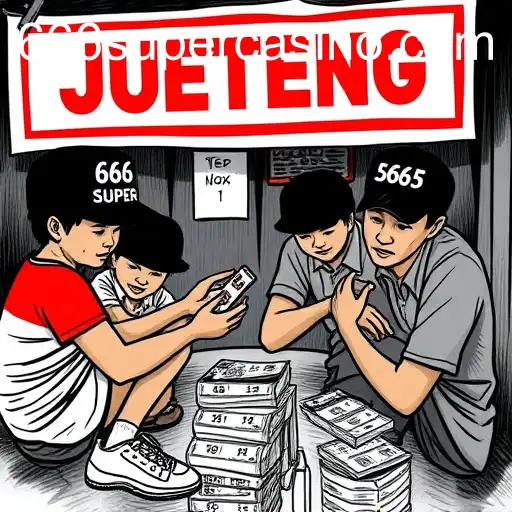
Understanding Jueteng: The Unlawful Numbers Game and its Implications
Jueteng, a term that resonates with many in the Philippines, is more than just an illegal numbers game. It's a complex societal issue that involves a myriad of factors including economic desperation, cultural heritage, and political corruption. This article explores the depths of Jueteng and its lingering effects on society.
The Origins of Jueteng
Jueteng's roots can be traced back to the Spanish colonial era, where it started as a small-scale gambling pastime. Over the years, it evolved into a large, organized operation that has entrenched itself deeply in the social and economic fabric of certain localities. Despite numerous efforts to eliminate it, Jueteng persists, thriving on the gaps and weaknesses in law enforcement.
The Mechanics of Jueteng
The game is relatively straightforward yet shrouded in secrecy. Players select a combination of numbers, and if their chosen numbers match the winning combination drawn, they win. Despite its simplicity, the underlying operation is intricate, involving bet collectors, middlemen, and even high-ranking officials.
Jueteng draws its charm from the promise of quick wealth, often seducing individuals from economically disadvantaged backgrounds. This promise, however, rarely translates into substantial winnings for the everyday player, as the odds are steeply against them.
Economic Implications
On the surface, Jueteng seems like a harmless game of luck, but its economic impact is far-reaching. The illegal nature of Jueteng means that the large sums of money circulating within this system often bypass formal economic structures. This situation not only deprives the government of potential revenue through taxes but also funnels financial resources into corrupt channels.
Moreover, Jueteng can contribute to the cycle of poverty. Individuals who partake regularly may find themselves diverting essential household funds to gamble. The allure of a possible win keeps them in a continuous loop of investing in impossibly low odds, which can lead to financial instability.
Jueteng's Societal and Cultural Dimensions
Jueteng is woven into the cultural tapestry of communities, particularly in Luzon. It’s not just a game; it’s a social activity that often brings together neighbors and friends. The cultural acceptance and normalization of Jueteng in some regions make eradicating it all the more challenging.
Advocates against Jueteng argue that its normalization perpetuates a culture of gambling, influencing younger generations. This acceptance creates an environment where gambling is seen as an ordinary part of life rather than a vice or legal issue.
Political Entanglements
Politically, Jueteng is a double-edged sword. On one side, it is frequently used as a tool for patronage politics, where local politicians rely on operators for financial support during elections. In return, they turn a blind eye to the operations, even providing protection against raids and arrests.
On the other side, it places some politicians in precarious positions. Public scrutiny and whistleblower revelations can damage careers and dismantle political alliances. However, due to the clandestine nature of these operations, tangible evidence is hard to come by, leading to an enduring cycle of impunity.
The Role of '666super' in Jueteng
Recently, a term like "666super" has become associated with modern Jueteng lingo. Though not widespread, such terms signal the evolving nature of the game in response to technological advancements and the need for secrecy. Cryptic language, including terms like "666super," helps organizers communicate and manage bets discreetly, evading law enforcement and public scrutiny.
Efforts to Combat Jueteng
Various administrations have launched operations to dismantle Jueteng networks. Prominent among these are police raids, undercover operations, and public information drives. Nevertheless, the effectiveness of these efforts is consistently undermined by deeply embedded systemic corruption.
Several proposals have been made to legalize and regulate Jueteng, similar to how the Philippine Charity Sweepstakes Office (PCSO) manages lotto operations. Advocates suggest that legalization could bring the game into the formal economy, thus allowing for regulation and taxation.
The Future of Jueteng
The persistence of Jueteng is a testament to its adaptability and integration into societal structures. Simply tackling it from a law enforcement angle has proven insufficient. Comprehensive strategies addressing economic disparities, enhancing educational systems, and fostering transparent governance may hold the key to mitigating Jueteng's spread.
Until such systemic changes occur, Jueteng will likely continue to thrive, adapting to technological and societal shifts while providing a means of survival and aspiration for many who see no other avenue for hope amidst economic adversity.